
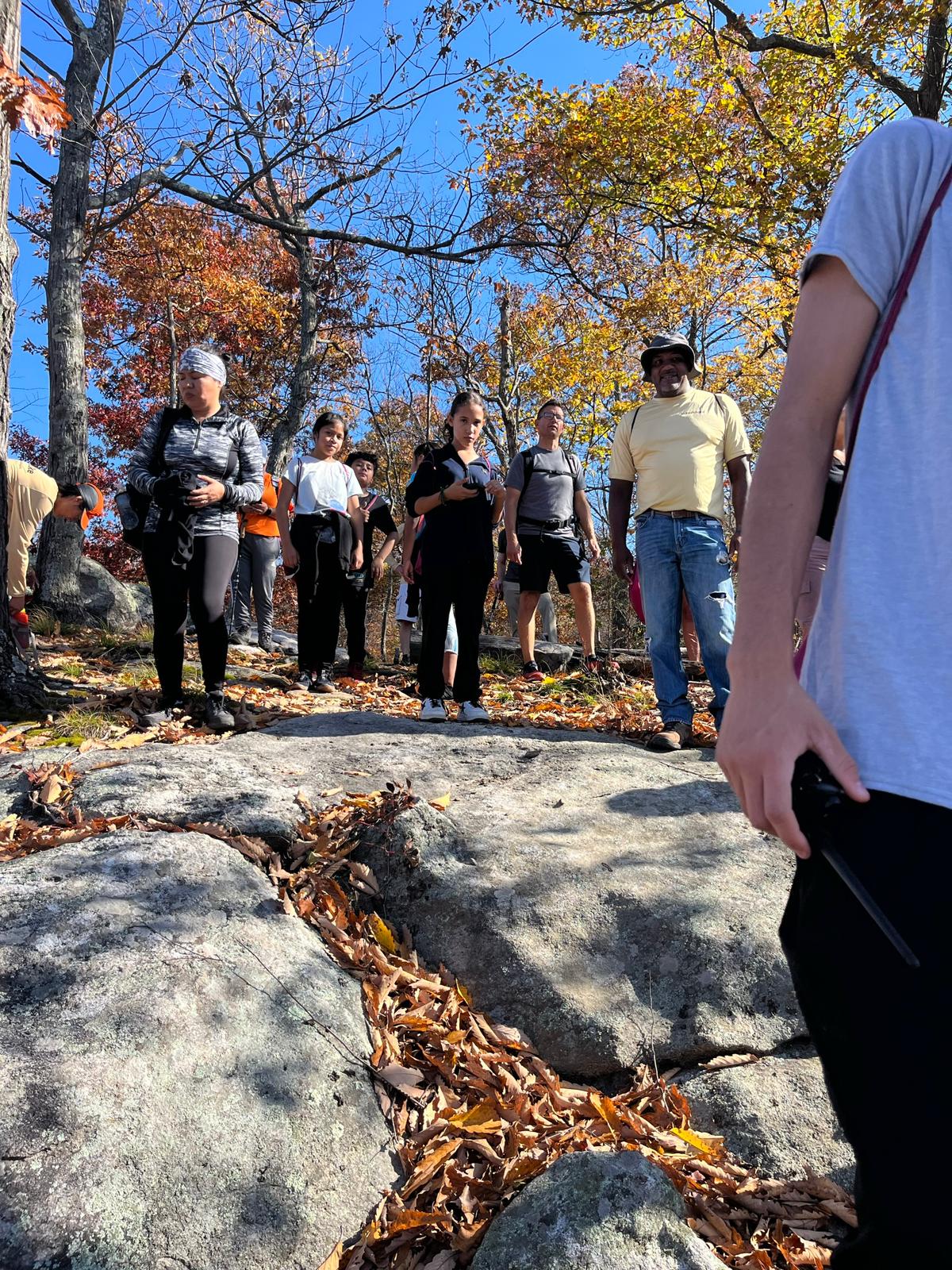
Hiking can be much more than a walk through the woods. For children, hiking builds leadership skills by creating natural opportunities to communicate, solve problems, support others, and gain confidence through real outdoor experiences.
A child does not need to reach the top of a mountain to feel successful. Sometimes confidence begins with completing a short trail, helping another hiker, spotting a trail marker, or making a good decision for the group.
At Take-A-Hike NJ, outdoor experiences are designed to give young people opportunities to explore nature in a safe, supportive environment. For children who may be experiencing the outdoors for the first time, even a simple hike can become an important step toward greater independence and self-belief.
Here are seven meaningful ways hiking can help children develop confidence and leadership skills.
1. Hiking Gives Kids Real Opportunities to Make Decisions
Leadership often begins with small decisions.
On a hiking trail, children regularly encounter situations that require them to observe what is happening around them and decide what to do next. They might notice a trail marker, decide where to step on uneven ground, determine when they need water, or help the group recognize that someone needs a short break.
These decisions may seem simple to adults. However, for a child, they can create a valuable sense of responsibility.
Instead of receiving instructions every moment, children have opportunities to think independently while still being supported by responsible adults.
For example, a guide might ask a young participant to help identify the next trail marker. Another child may be invited to help choose an appropriate place for the group to stop.
Gradually, children begin to understand that their observations and choices have value.
That feeling matters because confidence grows when children experience success for themselves.
For young people who are new to hiking, these moments can be especially meaningful. Take-A-Hike NJ has seen how introducing children to their first outdoor adventures can open the door to new experiences, curiosity, and personal growth.
2. How Hiking Builds Leadership Skills Through Teamwork?
Leadership is not only about taking charge. Strong leaders also know how to cooperate, listen, communicate, and support other people.Through teamwork and shared responsibility, hiking builds leadership and confidence in kids without making personal growth feel like a formal lesson.Through teamwork and shared responsibility, hiking builds leadership skills in a natural and enjoyable way.
Hiking gives children many opportunities to practice those skills without turning the experience into a classroom lesson.
One child may hold a branch aside for another participant. Someone else might remind the group to stay together. Meanwhile, another young hiker may encourage a friend who is struggling with a difficult section of the trail.
These small actions teach an important lesson: the group succeeds when people look out for one another.
In addition, hiking creates a shared experience. Everyone may walk at a different pace, notice different things, or react differently to a challenge. Therefore, children learn that teamwork often requires patience and flexibility.
They also begin to understand that leadership can look different from person to person.
One child may naturally speak up, while another leads by staying calm or helping someone quietly.
That sense of connection is one reason hiking together can be so valuable. Shared outdoor experiences can turn individual progress into a group achievement.
3. Hiking Helps Children Work Through Challenges
Every trail includes challenges.
Sometimes the ground becomes rocky. A hill may feel longer than expected. The weather may change slightly, or a young hiker may simply become tired.
These moments provide children with a safe opportunity to practice persistence.
Rather than immediately giving up, they can learn to slow down, take a break, ask for help, and continue when they are ready.
As a result, children begin to discover that difficulty does not always mean failure.
That lesson can be powerful.
A participant who initially says, “I can’t do this,” may later realize that the challenge became manageable once it was broken into smaller steps.
Eventually, reaching the next viewpoint or completing the trail provides something more meaningful than praise alone. The child has personal evidence that they handled a difficult moment.
This is one way hiking can build confidence.
The goal is not to push children beyond reasonable limits. Instead, supportive outdoor programs can create manageable challenges where young people have space to try, adjust, and succeed.
4. How Hiking Builds Leadership Skills Through Responsibility?
Responsibility is an important part of leadership, and hiking provides many simple ways for children to practice it.
Before a hike begins, participants may need to prepare a water bottle, wear appropriate footwear, check their belongings, or listen carefully to safety instructions.Learning responsibility on the trail is another way hiking builds leadership skills in children.
Once the group is on the trail, they can learn to stay with their partners, respect trail rules, carry their own supplies, and care for the environment around them.
None of these responsibilities needs to feel overwhelming.
Instead, each task gives children a chance to understand that their actions matter.
For instance, remembering to bring water becomes more meaningful when a child understands why hydration is important. Likewise, staying on a marked trail teaches more than following a rule; it also introduces respect for natural areas.
The U.S. National Park Service also recommends planning ahead, choosing an appropriate trail, carrying proper supplies, and understanding your group’s abilities before beginning a hike.
Over time, small responsibilities can help children become more confident about managing themselves and contributing to a group.
5. Hiking Shows Kids That Leadership Includes Helping Others
Children sometimes imagine a leader as the person standing in front and telling everyone what to do.
The outdoors can offer a different lesson.
On a hike, some of the strongest examples of leadership happen quietly.
A child might notice that another participant has fallen behind and slow down. Someone may share an encouraging word with a nervous first-time hiker. Another participant might help a teammate understand a trail sign.
These actions demonstrate empathy, awareness, and responsibility.
More importantly, children learn that they do not need a title to lead.
Anyone can make the group stronger by being thoughtful and dependable.
This understanding can help children who are naturally quieter recognize their own leadership abilities. They may not want to be the loudest person in the group, yet they can still make meaningful contributions.
At the same time, more outspoken children learn that leadership also involves listening.
Together, those experiences can create a healthier and more inclusive understanding of what it means to lead.
6. How Hiking Builds Leadership Skills Through Achievement?
Confidence becomes stronger when children can connect it to something they actually accomplished.This sense of achievement is another reason hiking builds leadership and confidence in kids through real, memorable experiences.
A hiking trail provides a clear example.
At the beginning, a child may wonder whether they can finish the route. Later, they can look back and recognize every hill, turn, and challenge they worked through along the way.Completing a challenging trail shows how hiking builds leadership skills while strengthening confidence and resilience.
That sense of achievement belongs to them.
Adults can certainly provide encouragement. However, completing the experience gives children their own evidence of progress.
For some young hikers, success might mean reaching a scenic viewpoint. For others, it could mean walking farther than they expected or overcoming nervousness about being outdoors.
There is no single definition of success.
What matters is giving children opportunities to notice their own growth.
In addition, positive outdoor experiences can create memories that children carry with them long after the hike ends. A photo from a trail, a conversation with a friend, or the feeling of completing something difficult can become a reminder of what they are capable of achieving.
7. Nature Gives Kids Space to Discover Their Strengths
Children spend much of their lives in structured environments.
School schedules, activities, screens, and daily routines can leave limited time for exploration.
A hiking trail offers something different.
There is room to observe, ask questions, explore interests, and interact with other people in a less formal setting.
One child may become fascinated by wildlife. Another may enjoy photography, navigation, or identifying plants. Someone else may discover that they are good at encouraging others.
Because of this, outdoor experiences can reveal strengths that may not always appear in traditional settings.
A child who is quiet in a classroom may become highly observant on a trail. Another who struggles with a particular academic subject may discover confidence through physical activity or teamwork.
These discoveries can change how children see themselves.
Take-A-Hike NJ’s 2025 Impact Report offers a closer look at the organization’s efforts to create meaningful outdoor opportunities for young people and build a stronger foundation for future programs.
Why Hiking Builds Leadership and Confidence in Kids Naturally ?
Some of the most valuable learning happens when children do not feel like they are being taught.
Hiking naturally creates situations where communication, patience, decision-making, teamwork, and responsibility become necessary.
For that reason, outdoor leadership development can feel very different from sitting through a lecture.
A trail presents real situations.
Children make choices, experience the results, adjust when necessary, and keep moving forward.
Adults still play an essential role. Guides, volunteers, teachers, mentors, and parents provide safety, encouragement, and appropriate boundaries. However, children also need enough space to experience appropriate independence.
Finding that balance can make outdoor activities both enjoyable and meaningful.
Most importantly, every hike does not need to become a formal leadership exercise.
Sometimes children simply need time to walk, talk, laugh, notice their surroundings, and enjoy being outside.
Personal growth often happens naturally along the way.
How Take-A-Hike NJ Supports Youth Through Outdoor Experiences?
Take-A-Hike NJ works to make safe and meaningful outdoor experiences more accessible to young people across New Jersey.
Programs can create opportunities for children to experience hiking while developing teamwork, confidence, communication, and a stronger connection with the outdoors.
Accessibility is especially important because not every child has the same opportunity to explore nature.
Transportation, equipment, cost, adult supervision, and unfamiliarity with outdoor recreation can all create barriers.
By working with community organizations, schools, volunteers, and supporters, Take-A-Hike NJ aims to help reduce those barriers and create welcoming experiences for young participants.
The goal is not to produce perfect hikers or turn every child into the same type of leader.
Instead, outdoor experiences can give young people room to discover their own abilities.
One child may learn persistence. Another may develop stronger communication skills. Someone else may simply realize that they enjoy spending time outdoors.
Each experience has value.
Building Future Leaders One Trail at a Time
Leadership does not suddenly appear when a child reaches adulthood.
It develops gradually through experiences that teach responsibility, resilience, communication, empathy, and confidence.
Hiking can provide many of those experiences in a natural and memorable way.
A trail asks children to keep moving when something becomes difficult. Group adventures encourage them to support one another. Small responsibilities help them become more independent, while completing a hike gives them a genuine reason to feel proud.
Ultimately, hiking builds leadership and confidence in kids by giving them opportunities to make decisions, overcome challenges, and support others.
The lessons are not limited to the trail.
A child who learns to encourage a teammate, remain calm during a challenge, make a thoughtful decision, or believe in their own ability can carry those skills into school, friendships, family life, and future opportunities.Ultimately, hiking builds leadership skills by giving children opportunities to make decisions, overcome challenges, and support others
Every trail begins with a first step.
For a young person, that step may also become the beginning of greater confidence, stronger relationships, and a growing belief in what they can accomplish.