
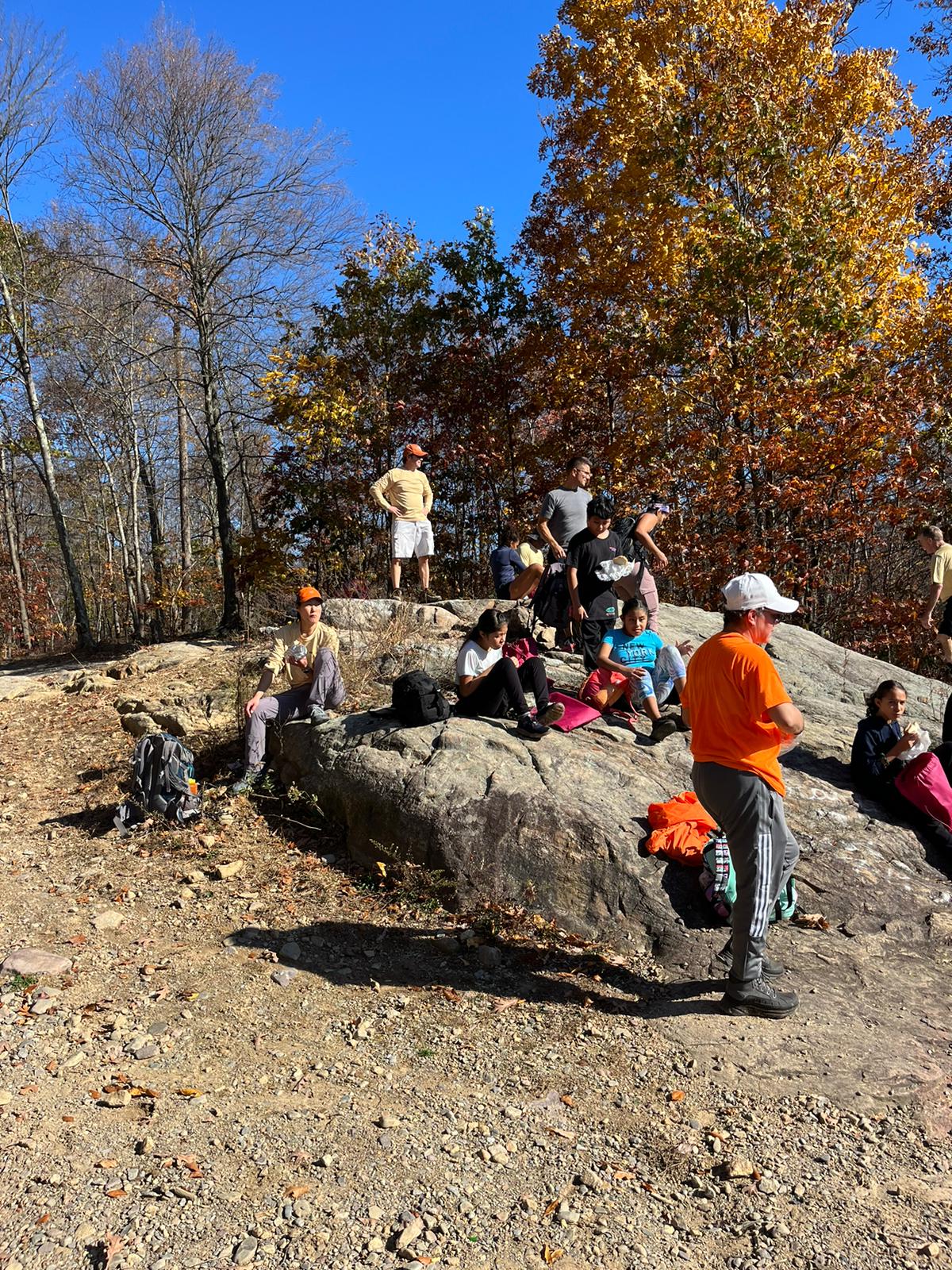
Outdoor adventures for youth can open the door to confidence, curiosity, teamwork, and meaningful connections with nature. For children growing up in busy urban communities, even a simple walk through a quiet forest can feel like entering an entirely different world. Traffic fades into the background, screens stay in backpacks, and young people have space to explore, move, think, and enjoy something new.
That simple change of environment can create meaningful opportunities for growth. Outdoor adventures empower inner-city youth by giving young people space to move, explore, make decisions, connect with others, and discover abilities they may not have realized they had.
At Take-A-Hike NJ, the goal is not simply to get children from the beginning of a trail to the end. Instead, each outdoor experience can become an opportunity to build confidence, encourage teamwork, promote healthy activity, and develop a positive relationship with nature.
For a child experiencing hiking for the first time, even a short trail can become a memorable adventure.
Why Outdoor Adventures Matter for Inner-City Youth
Access to outdoor recreation is not always equal. Transportation, equipment costs, unfamiliarity with hiking, and limited access to nearby natural spaces can make outdoor activities harder for some families to experience.
However, those barriers should not determine whether a child gets the opportunity to explore nature.
Programs that create safe and welcoming outdoor experiences can help make the outdoors feel more accessible. More importantly, children do not need to be experienced hikers or athletes to benefit. A manageable trail, supportive adults, comfortable pacing, and a positive group can provide an excellent introduction.
According to the National Park Service, hiking can support physical activity while also providing opportunities to enjoy nature and strengthen relationships with others.
That combination makes hiking especially valuable for young people.
1. Outdoor Adventures Empower Inner-City Youth Through Confidence
Confidence does not always develop through a dramatic achievement. Often, it begins with small moments.
A child may complete a hill that looked difficult at first. Another may learn how to follow a trail marker. Someone else might help a friend across a rocky section of trail.
Each success sends a simple message: I can do this.
As the hike continues, those small accomplishments begin to add up. Consequently, children may become more comfortable trying unfamiliar activities and solving problems independently.
Outdoor adventures also create situations where progress feels real. Instead of receiving a grade or score, children can physically see how far they have traveled.
Reaching a viewpoint, finishing a loop, or simply completing a first hike can create a genuine feeling of accomplishment.
Confidence Without Competition
One of the most valuable parts of hiking is that children do not have to compete against one another.
The fastest person does not need to “win.”
Instead, the group can move together, encourage one another, and celebrate everyone who completes the experience. As a result, children can focus on personal progress rather than comparison.

2. Outdoor Adventures for Youth Create Space to Slow Down
Children today spend much of their day surrounded by schedules, screens, classrooms, traffic, notifications, and other distractions.
A forest offers something different.
There is space.
Instead of constantly looking at a screen, a child might notice sunlight moving through the trees, listen to birds, watch water move through a stream, or stop to examine an unusual leaf.
Those moments may appear simple, yet they can encourage children to become more present and curious about their surroundings.
Moreover, research summarized by the National Park Service links time in nature with benefits such as improved mood, relaxation, attention, and overall well-being.
Hiking therefore does not have to feel like another structured lesson. Children can learn simply by observing, asking questions, and exploring.
3. Hiking Encourages Healthy Physical Activity
Hiking gets children moving without making exercise feel like a traditional workout.
They walk uphill, balance on uneven surfaces, move around rocks, and cover distances at a comfortable pace. Meanwhile, the changing scenery keeps the experience interesting.
The CDC reports that physical activity for children supports brain health, muscular fitness, bone strength, heart and lung health, and attention and memory.
Of course, a young person’s first outdoor adventure does not need to involve a difficult mountain.
In fact, shorter and easier trails often create a better introduction.
A successful first experience can leave a child wanting to return. That positive association matters because healthy habits become easier to maintain when the activity is enjoyable.
For children who are completely new to the trail, our guide to hiking together offers additional beginner-friendly advice.
Related reading: Join the Take-A-Hike NJ Club: Why Hiking Together Is Better Read the Take-A-Hike NJ guide
4. Outdoor Challenges Build Problem-Solving Skills
Trails are naturally unpredictable.Well-planned outdoor adventures for youth also create natural opportunities to practice problem-solving and decision-making.
A path may become muddy. A group might reach a fork in the trail. Someone may need to decide where the next trail marker is located.
Although adults remain responsible for safety, these everyday situations allow children to think.
For example, a guide might ask:
“Which direction does the marker point?”
“What should we do if the trail becomes slippery?”
“How can we help everyone stay together?”
Rather than immediately giving the answer, adults can allow children to observe, discuss, and suggest solutions.
Therefore, hiking becomes more than physical activity. It becomes an environment where young people practice judgment and decision-making.
Even better, the learning feels natural because the challenge is happening in real time.
5. Outdoor Adventures for Youth Build Teamwork and Leadership
A hiking group works best when everyone looks out for one another.
One child may notice a trail marker. Another may remind the group to stay together. Someone may encourage a friend who feels tired.
These small interactions help children understand that leadership is not simply about being in charge.
Leadership can also mean listening, helping, communicating clearly, staying calm, and supporting the group.
At the same time, children learn how to participate as team members.
They may take turns leading a section of trail, helping distribute supplies, identifying landmarks, or checking that nobody has fallen behind.
Those responsibilities can make children feel valued.
More importantly, they show young people that their actions can positively affect others.
Take-A-Hike NJ places teamwork and personal growth at the center of its outdoor experiences for young people.
Learn more about Take-A-Hike NJ’s mission and programs
6. New Outdoor Experiences Can Expand a Child’s World
For some participants, a Take-A-Hike outing may be their first meaningful experience on a hiking trail.
That matters.
A young person who has never walked through a forest may discover that they enjoy photography. Another child might become interested in wildlife, conservation, maps, geology, history, or simply spending time outdoors.
Suddenly, the outdoors becomes something they can imagine themselves being part of.
Instead of thinking, “Hiking isn’t for me,” the child begins thinking, “I know how to do this.”
That shift can be powerful.
Moreover, introducing children to the outdoors at a young age may help create a longer-lasting connection with nature. The National Park Service specifically encourages hiking with children as a way to help develop a lifelong relationship with the outdoors.

7. Positive Experiences Create a Connection With Nature
People are more likely to care about something when they have experienced it personally.
A child can read about forests, wildlife, clean water, and conservation in a classroom. However, standing beside a stream or walking beneath tall trees creates a different kind of understanding.
Nature becomes real.
During a guided hike, children can learn simple habits such as staying on designated trails, carrying out their trash, respecting plants, and observing wildlife from a safe distance.
These lessons do not need to sound like lectures.
Instead, they can become part of the experience.
For example, a guide might explain why hikers stay on a particular trail or why food wrappers should never remain in the woods.
Over time, those small lessons can encourage environmental responsibility.
Take-A-Hike NJ’s hiking guidance also emphasizes preparation, confidence, and responsible behavior on the trail.
Related reading: 7 Expert Hiking Tips to Empower Your Trail Adventure
What Makes a Great First Hiking Experience?
The best first hike is not necessarily the longest or most impressive trail.
Instead, it should leave a child thinking:
“I want to do that again.”
For that reason, beginner experiences should focus on comfort, safety, encouragement, and fun.
A few simple principles can make a major difference:
- Choose a manageable, well-marked trail.
- Bring enough water and snacks.
- Dress for the weather.
- Allow plenty of breaks.
- Keep the group together.
- Encourage questions and curiosity.
- Celebrate progress instead of speed.
- Give children appropriate opportunities to make decisions.
- Leave the natural area as you found it.
The National Park Service also recommends planning ahead when hiking with children and selecting routes that match their abilities.
Most importantly, adults should remember that the experience belongs to the children.
Stopping to look at a frog, unusual rock, waterfall, or bird may feel more important to a first-time hiker than reaching the planned viewpoint quickly.
That curiosity is part of the adventure.
Creating More Opportunities for New Jersey Youth
New Jersey offers forests, lakes, historic landscapes, waterfalls, wildlife areas, and hundreds of miles of trails.
Yet simply having natural spaces nearby does not guarantee that every child can experience them.
Transportation, equipment, guidance, and supportive adult supervision can all influence access.
That is why community organizations, schools, families, volunteers, nonprofits, and local partners can make such an important difference.
Take-A-Hike NJ works to create opportunities for children and teens to experience the outdoors in a safe, positive, and supportive environment.
The organization’s 2025 impact report describes guided hikes for youth from under-resourced urban communities in Passaic County and efforts to reduce participation barriers through transportation, food, equipment support, and adult supervision.
Each hike may last only a few hours. However, the memory of accomplishing something new can stay with a young person much longer.
Outdoor Adventures Can Begin With One Step
A child’s first hike does not need to change everything overnight.
Sometimes the most important outcome is much simpler.
A young person returns home feeling proud.
A young person may return home excited to tell someone about the view they saw. Helping a friend along the trail can become another memorable part of the experience. For others, the biggest surprise may be discovering how enjoyable a simple walk through the woods can feel.
Perhaps they even ask when the next hike will be.
That is how meaningful relationships with the outdoors can begin.
Ultimately, outdoor adventures empower inner-city youth because they provide opportunities to move, explore, cooperate, think, lead, and discover new possibilities.
One trail will not solve every challenge a young person faces. Still, one positive experience can open a door.
And sometimes, all a child needs is the opportunity to take that first step.
Join Take-A-Hike NJ
Take-A-Hike NJ helps young people experience nature through supportive outdoor adventures designed around exploration, confidence, teamwork, and connection.
Whether you are a parent, educator, community organization, volunteer, sponsor, or supporter, you can help create more opportunities for New Jersey youth to discover the outdoors.
Explore Take-A-Hike NJ and get involved