
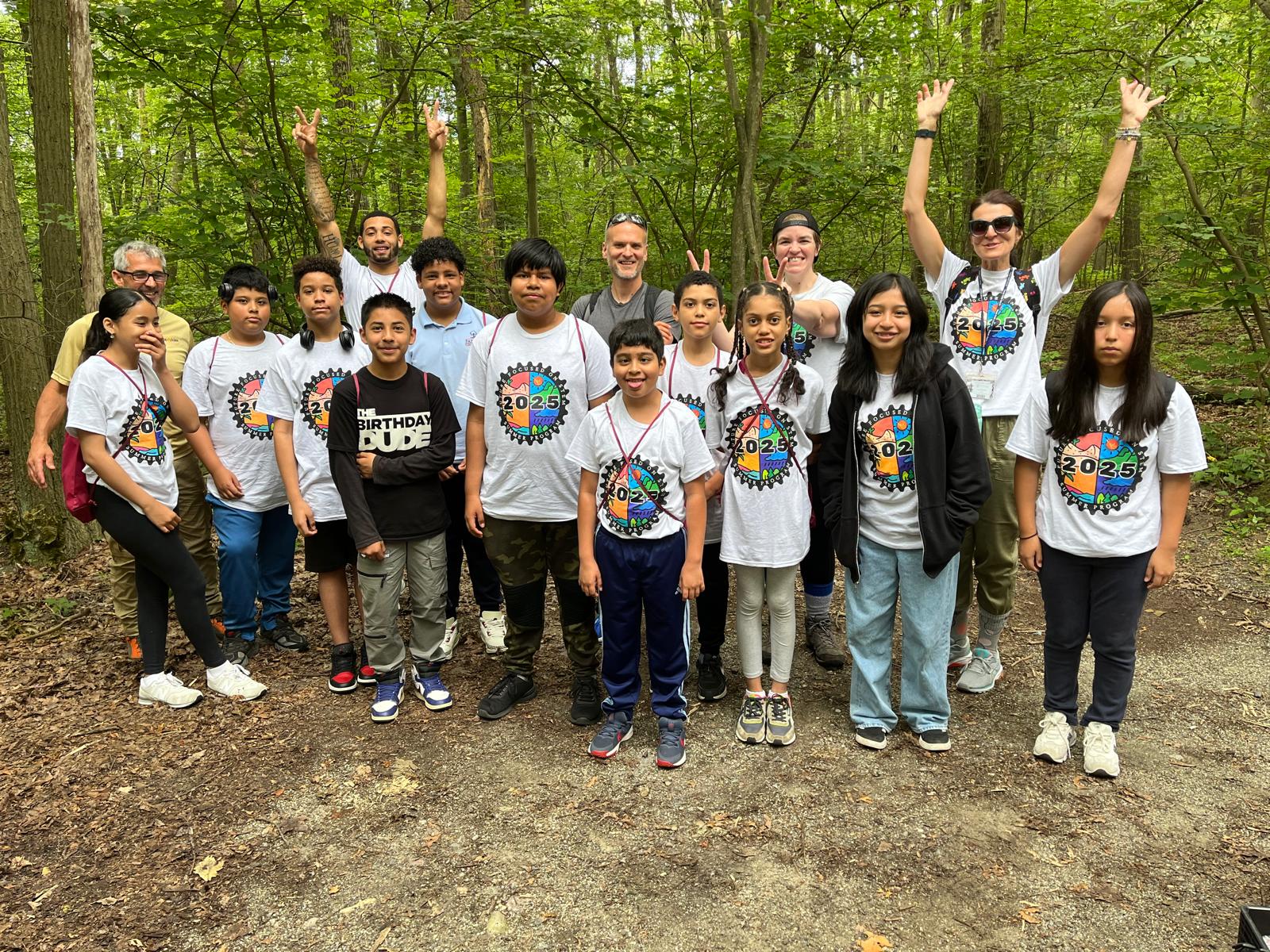
A strong leadership program can help children and teenagers discover important skills long before they enter adulthood. Leadership can begin with something as simple as helping a teammate, sharing an idea, taking responsibility for a small task, or encouraging someone who is having a difficult day.
For families in New Jersey, outdoor experiences can provide a meaningful setting for young people to develop these abilities. Hiking, group challenges, nature activities, and hands-on experiences can give children opportunities to communicate, make decisions, solve problems, and discover strengths they may not have realized they had.
Rather than waiting until adulthood to develop leadership skills, children can begin learning through everyday experiences that encourage confidence, responsibility, and teamwork.
What Does Leadership Mean for Kids and Teens?
When people hear the word leadership, they often imagine someone standing in front of a group and giving instructions. However, leadership for children and teenagers can be much simpler—and much more personal.
A young leader might be the child who notices that someone is being left behind and offers encouragement. In another situation, a teenager may help organize a group activity or remain calm when plans unexpectedly change.
Leadership can involve:
- Listening to others
- Communicating clearly
- Taking responsibility
- Making thoughtful decisions
- Solving problems
- Supporting teammates
- Showing confidence
- Learning from mistakes
Although these are everyday skills, they can influence how children approach school, friendships, challenges, and eventually their professional lives.
Why Is a Youth Leadership Program in NJ Important?
Children often learn valuable lessons when they are given opportunities to participate rather than simply being told what to do.
A kids hiking club can create an environment where children and teenagers practice important skills through real experiences. Instead of memorizing a list of leadership qualities, participants can discover those qualities through teamwork, challenges, exploration, and interaction with others.
Moreover, joining an outdoor hiking group for kids can be especially valuable for children who may not naturally see themselves as leaders.
For example, a quiet child may discover that they have thoughtful ideas worth sharing. Meanwhile, a teenager who is hesitant to take initiative may gradually become more comfortable making decisions. Someone who struggles with teamwork may also begin to understand how much can be accomplished when everyone contributes.
Leadership does not look the same in every child. In fact, that is exactly what makes leadership development so meaningful.
How Can an Outdoor Leadership Program in NJ Build Confidence?
Confidence rarely appears overnight. Instead, it often grows through small experiences where children try something unfamiliar, face a challenge, and realize they are capable of handling it.
An outdoor adventure New Jersey program can provide these opportunities naturally.
At first, a new activity may feel uncomfortable. Likewise, a group challenge may not go according to plan, and a trail may require patience, communication, and teamwork. However, instead of viewing these situations as failures, children can learn how to adapt and continue moving forward.
Outdoor experiences can help young people:
- Step outside their comfort zone
- Make age-appropriate decisions
- Work through challenges
- Communicate with peers
- Take responsibility
- Learn from mistakes
- Recognize their own progress
The goal is not to turn every child into the most outspoken person in the group. Instead, real confidence can be quieter. It is the feeling of knowing, “I can try this. I can figure it out. I can ask for help when I need it.”
What Are Leadership Activities for Kids in NJ?
Leadership development does not need to feel like another classroom lesson.
In fact, leadership activities for kids in NJ can include group challenges, nature exploration, hiking, problem-solving activities, cooperative games, and outdoor tasks that encourage children to work together.
While the activity itself is important, what children learn during the experience can be even more valuable.
For instance, a group challenge may require participants to decide how to reach a shared goal. One child may naturally take the lead, while another may be better at organizing ideas. At the same time, someone else might notice a problem that the rest of the group missed.
As a result, children can begin to understand that leadership is not about one person doing everything. Instead, it involves recognizing strengths, communicating effectively, and helping the entire group move forward.
Learning to Communicate
Strong leadership begins with communication. Children can learn that sharing an idea is important; however, listening to someone else’s perspective matters too.
Over time, these interactions can help young people become more comfortable expressing themselves while also respecting different viewpoints.
Learning to Take Responsibility
When young people are trusted with age-appropriate responsibilities, they can begin to understand that their choices may affect others.
Consequently, even small responsibilities can become meaningful opportunities to develop independence and accountability.
Learning to Handle Setbacks
Not everything will go perfectly, and that is part of the learning process.
Outdoor experiences can show children that changing plans, making mistakes, and trying again are normal parts of growth. Therefore, setbacks can become opportunities to practice patience, resilience, and problem-solving.
How Can a Leadership Program Help Teens in NJ?
The teenage years often bring new responsibilities, higher expectations, and a greater desire for independence.
Because of this, a leadership program for teens can provide a positive environment where young people practice important skills without feeling as though they are simply being lectured about personal development.
Through outdoor challenges and group experiences, teenagers may have opportunities to:
- Take initiative
- Make decisions
- Communicate with different personalities
- Support other participants
- Work through challenges
- Think independently
- Become more comfortable with responsibility
These experiences can be particularly meaningful because teenagers are beginning to think more seriously about who they are and who they want to become.
With encouragement and experience, a supportive program can give teens room to discover that their voice matters and that they have something valuable to contribute.
Where Can Young People Develop Leadership Skills in New Jersey?
For families searching for youth leadership activities in New Jersey, outdoor environments can provide a refreshing alternative to traditional structured learning.
Parks, trails, nature-based activities, camps, community programs, and outdoor education experiences can all create opportunities for children to explore while developing important social and personal skills.
However, the setting is only part of the experience. The quality of the program and the support provided to participants can matter even more.
Parents may want to look for opportunities that are appropriate for their child’s age and experience level. In addition, a strong leadership program should encourage participation, teamwork, exploration, and positive challenges.
Most importantly, children should have space to be curious, make mistakes, ask questions, and grow at their own pace.
Why Can Hiking Be Part of a Leadership Program?
At first, hiking may sound like a simple way to spend time outdoors. Yet, when children hike together, the experience can naturally involve many of the skills associated with leadership.
A hiking-based leadership program in NJ can encourage young people to communicate, remain aware of their surroundings, support one another, and work toward a shared goal.
During an outdoor experience, someone may need encouragement. At another point, the group may need to discuss a decision. Challenges may also require patience instead of rushing toward a solution.
As these moments arise, children have opportunities to practice leadership without necessarily realizing that they are doing it.
A trail, therefore, can become more than a route from one point to another. It can become a place where a child develops patience, responsibility, resilience, and confidence—one step at a time.
What Makes Experiential Learning Valuable for Children?
Children often understand an idea differently when they experience it for themselves.
This is where experiential learning can make a meaningful difference. Instead of simply explaining teamwork or problem-solving, hands-on activities allow children to practice those skills in real situations.
Imagine a group facing a challenge that cannot be solved immediately. Participants may need to talk, listen, test different ideas, and perhaps start again.
Unlike a traditional worksheet, this type of experience can demonstrate how problem-solving works in real life.
Through experiential learning, children can discover that:
- Problems can have more than one solution
- Asking for help is not a weakness
- Different people bring different strengths
- Mistakes can lead to better decisions
- Working together can make challenges feel more manageable
Ultimately, these lessons can stay with young people long after the activity itself has ended.
How Do Teamwork Activities Help Young Leaders?
Leadership and teamwork go hand in hand.
Teamwork activities can help young people understand that being a leader does not mean doing everything alone. Sometimes, leadership means knowing when to step forward. At other times, it means listening carefully or giving someone else an opportunity to contribute.
Outdoor activities can make these lessons feel especially natural because children are working toward something together.
Along the way, participants can learn to encourage one another, divide responsibilities, respect different abilities, and celebrate shared accomplishments.
Gradually, these experiences may help children become more comfortable working with people who think, communicate, or approach challenges differently from them.
How Can Parents Choose a Leadership Program for Youth in NJ?
When searching for a leadership program in NJ, parents may want to look beyond the word “leadership” in a program’s name.
Instead, consider whether the experience gives children opportunities to:
- Participate actively rather than simply observe
- Work with other children
- Explore the outdoors
- Take appropriate responsibility
- Practice communication
- Solve problems
- Build confidence
- Learn from challenges
It is equally important to consider whether the experience feels encouraging and age-appropriate.
Every child develops differently. Some may immediately jump into a new activity, whereas others may need more time before they feel comfortable. A supportive leadership program allows different personalities to participate and grow at their own pace.
How Take-A-Hike NJ Supports Youth Leadership Experiences
For families interested in combining outdoor exploration with personal growth, Take-A-Hike NJ provides opportunities for young people to explore nature while participating in youth-focused outdoor experiences.
Through activities that encourage movement, exploration, interaction, and teamwork, children and teens can experience challenges in an environment that feels different from the classroom.
In addition, outdoor experiences can provide meaningful opportunities for young people to practice communication, responsibility, cooperation, and problem-solving.
Families can learn more about Take-A-Hike NJ and explore available opportunities by visiting the organization’s website.
Suggested internal links to add within this section:
- Link Take-A-Hike NJ to your homepage.
- Link youth-focused outdoor experiences to your Programs or Activities page.
- Link learn more about Take-A-Hike NJ to your About page.
- Add a natural link to your Contact or Donation page where appropriate.
For additional information about youth development and the benefits of positive experiences for young people, you can also link to a trusted educational or youth development resource.
Read: 10 Beginner Hiking Mistakes to Avoid
Frequently Asked Questions About Leadership Programs
What is a leadership program for kids?
A leadership program for kids helps young people develop skills such as communication, responsibility, teamwork, decision-making, problem-solving, and supporting others. Leadership is not simply about being the person in charge.
What are youth leadership programs in NJ?
Youth leadership programs in NJ are experiences designed to help children and teenagers develop personal and leadership skills through activities such as teamwork, problem-solving, outdoor exploration, and hands-on learning.
How can hiking help children develop leadership skills?
Hiking can create opportunities for children to communicate, cooperate, encourage others, make decisions, and work through challenges together. As a result, these experiences can naturally support leadership development.
Are outdoor leadership programs suitable for beginners?
Many outdoor programs can be suitable for beginners when activities are appropriate for participants’ ages and experience levels. A supportive environment can help children gradually become more comfortable with new experiences.
What are the benefits of leadership activities for teens?
Leadership activities can help teenagers strengthen communication, confidence, teamwork, decision-making, responsibility, and problem-solving skills.
How do outdoor activities build confidence in children?
Outdoor activities give children opportunities to try new things, face manageable challenges, learn from mistakes, and recognize their own abilities. Over time, these experiences can gradually strengthen confidence.
Why is teamwork important for young leaders?
Teamwork teaches children how to listen, communicate, respect different perspectives, share responsibility, and work toward a common goal. As a result, these skills can become important parts of effective leadership.
Conclusion: Leadership Starts With Small Steps
Leadership does not begin with a title. Instead, it can begin when a child decides to help someone, when a teenager finds the confidence to speak up, or when a young person faces a challenge and chooses to keep trying.
For this reason, a leadership program in NJ can be about much more than traditional leadership classes. Outdoor experiences can give children and teenagers real opportunities to develop confidence, communication, teamwork, responsibility, and resilience while participating in active and meaningful experiences.
Parents can also gain something valuable from these opportunities: the chance to watch their children discover abilities they may not have known they possessed.
Sometimes growth happens in a classroom. At other times, it happens while walking a trail, solving a challenge with friends, or taking one more step when the path feels difficult.
For families looking for meaningful outdoor experiences for their children, Take-A-Hike NJ can be a place to begin.
Give your child the opportunity to explore, grow, and discover what they are capable of one experience and one step at a time.